I've been installing decks for 14 years, and I've seen a lot of products come and go. Envision EverGrain decking is one of the few that made me stop and measure twice. It's not the cheapest composite on the market, but it might be the most realistic wood look you can get without real wood. Here's what I learned putting it on a Minnesota house last fall.
What Is This Composite?
Envision EverGrain Decking is a capped composite board, which means it has a wood-fiber and plastic core wrapped in a polymer cap. That cap is what keeps moisture out and the color from fading. The whole point is to mimic the look of fresh-cut lumber, and I've got to say, it does the job better than most. The grain pattern isn't printed on like some boards. It's pressed and embossed, so the texture follows the grain. Run your hand over it and it feels like cedar, not like plastic.
What I Like About It
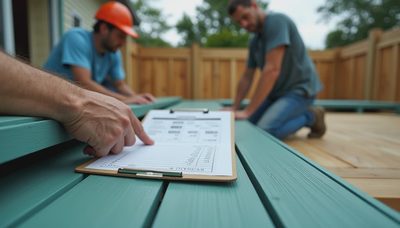
I showed up to a house in Edina where the homeowner had already bought a full pallet of Envision EverGrain decking. My crew and I tore off an old cedar deck that was rotting at the posts. Swapping to this product changed the whole feel of the backyard. The boards use a hidden fastener system, so the top surface is completely smooth, no screws to catch your bare feet. In the two years I've seen these decks through winter, the cap hasn't cracked or peeled in the freeze-thaw cycle. That's not something I can say for every composite I've installed.

Where It Falls Short
This decking costs more than standard composite. You're paying for that wood grain and the cap. Material alone runs about $6 to $9 per square foot, and installed, you're looking at $14 to $18 a square foot. That's a 300-square-foot deck for $4,200 to $5,400 before railings. The other thing is heat. Like any dark composite, it absorbs the sun. In July, you'll want shoes on if the deck faces south. And the hidden fastener clips are not forgiving when the framing isn't level. This isn't a beginner DIY product.
How Much Does It Cost?
Let's be specific. For a 400-square-foot deck with basic railings, I quoted a homeowner $9,500, and that included the framing since we were starting from scratch. If you're just replacing the deck boards on an existing frame, material and labor should land around $6,000 to $8,500. The price difference between Envision EverGrain Decking and a good PVC like TimberTech can be small, so it's worth comparing the warranties. The cap gives you resistance to stains and moisture, but read the fine print on the finish warranty.
Maintenance and Cleaning
The biggest reason homeowners switch to composite is the maintenance. With a cedar deck, you're sanding and staining every other year. A 300-square-foot deck can eat a whole weekend and $300 in stain. With this composite, you wash it with soap and water once a year and you're done. I've also seen what happens when people skip that washing: mold can grow in the grooves in shady spots. A soft brush and a deck cleaner fix it. That's the same advice I'd give for any composite, but the cap on this product makes it less likely to absorb the grime.

Is It Worth the Money?
If you're in a cold climate and you want the look of a real ipe deck without the oiling, Envision EverGrain Decking is a solid pick. But it only makes sense if you're planning to stay in the house for at least five years. The premium over pressure-treated lumber takes a while to pay back. For a starter home or a fix-and-flip, I'd save the money and go with treated pine. For a forever home, this is the kind of material that still looks good when the kids are heading to college.
Installation Advice From a Guy Who's Done It
Before my crew and I put in our second Envision EverGrain Decking installation, I called the manufacturer and asked about expansion gaps. They were straightforward: leave a 1/8-inch gap between boards, and butt joints need support. The hidden clips work well, but you have to keep the joists on 12-inch centers if you're walking on a diagonal. And plan for a little extra waste on the compound angles. We lost about 8% to cuts, which is normal for any grooved composite.
Common Mistakes to Avoid
The biggest mistake I see is using the wrong fasteners. Some homeowners buy cheap color-matched screws and skip the hidden clip system. That leaves screw heads exposed, and they rust or back out. Another mistake is not letting the boards acclimate. Leave them stacked in your garage for at least 48 hours before cutting. And don't set the boards tight against the house. You need a proper expansion gap at every end, or you'll see buckles by August. If you're hiring a contractor, ask how many composite decks they've built. The install matters more than the material.
The Bottom Line
Envision EverGrain Decking isn't the budget option. It's the upgrade. If you want a deck that looks like wood on Memorial Day and still looks good on Labor Day, it's worth every penny. I've been on that roof, and in this case, the material didn't disappoint. Stay warm. Stay dry. — Dean




No notes on this sheet yet.