I've stood on more decks than I can count, and I'll tell you something: the brand name on the board matters less than the person putting it down. But when you search duxxbak decking price, you want real numbers, not a runaround. Let me give you what I've seen on the job over the past 14 years.
Duxxbak is a premium composite decking made in North America. It's known for a reversible capping process that puts the same wood-grain finish on both sides of every board. That's a nice perk if you scratch the surface during installation, though you won't want to flip boards later because the edges will not line up perfectly. For a homeowner planning a new deck, duxxbak decking price lands in the upper-middle range between standard composite decks and the luxury PVC boards. You are getting a thicker board profile, which means less sagging over time.
Duxxbak Decking Price Per Square Foot
Here's the honest breakdown. You'll pay $4.80 to $6.20 per square foot for the Duxxbak boards themselves, depending on the color line and whether you buy through a distributor or a big-box store. That covers the board material only, not hidden clips and fasteners. Most deck projects use the full system: hidden fasteners, starter clips, color-matched screws, and flashing. Add another $0.50 to $0.80 per square foot for those parts.
When you bring in a contractor, the installed cost typically runs $9.50 to $14 per square foot. I've quoted a lot of deck jobs in the Twin Cities, and that range holds across the Midwest. For a 320-square-foot deck (roughly 16 by 20), you're looking at $3,000 to $4,500 installed. If you do it yourself, the same material kit lands around $1,700 to $2,200, assuming your under-structure is already solid and you have access to a good drill.
What Changes the Final Price
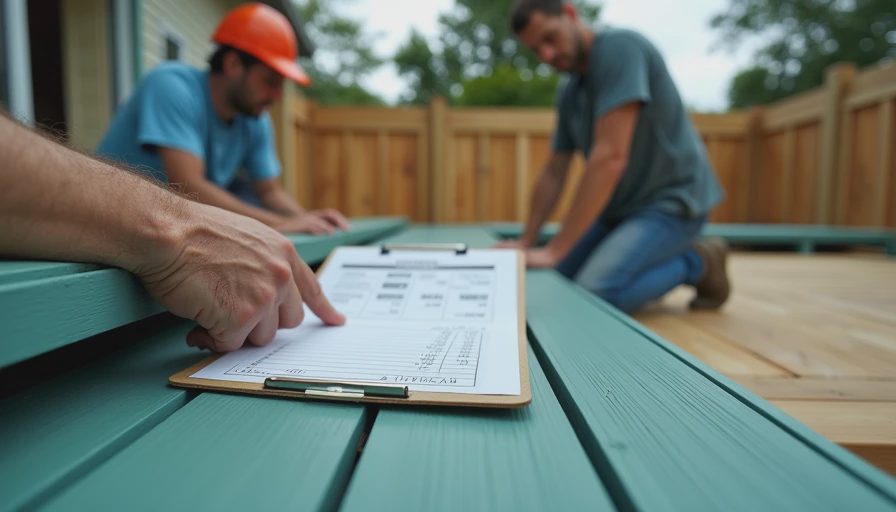
Three things move duxxbak decking price more than anything else: the condition of your frame, the deck height, and your local labor rates. If your joists are 12 inches on center, composite decking works fine; if they are 24 inches apart, you'll need to add joists because composite boards flex. That would add $300 to $700 in lumber and labor.
Height matters because of guardrails. Most composite decking brands require top-mounted railing posts on the outer edge. That means you'll pay separately for balusters, rail kits, and post anchors. A basic composite railing system runs $35 to $45 per linear foot installed. On a two-sided 120-foot deck, that's $4,200 on top of the deck. So the advertised price per square foot never tells the whole story.
Labor rates vary by region, too. In the Northeast or West Coast, plan for the top of that installed range. In the South or Midwest, you might get closer to the lower end. A straight, ground-level deck is a three-day job for a two-person crew in my experience. A second-story deck with stairs and a larger footprint can push two weeks.
How Duxxbak Stacks Up Against Trex and TimberTech
Comparing duxxbak decking price to Trex and TimberTech helps you see what you're buying. Trex's entry-level line starts around $3.80 per square foot, but you may give up some of the higher-end aesthetics. TimberTech's midrange starts near $4.20. Duxxbak sits just above those, but you get a thicker board (one full inch) with less flex or bounce. I've installed all three, and the premium feel of Duxxbak is real. It's a trade-off: you pay more up front, but you may avoid board replacement many years down the road.
Material Only vs. Full Installed Project
When you see a low price advertised, ask whether it's material-only or installed. The duxxbak decking price is often quoted as the board cost to pull you in. The full install includes demo, framing repair, joist tape, fasteners, railing, and clean-up. That labor is where half your money goes. A solid composite deck generally costs more per square foot than a pressure-treated lumber deck, but it saves you the every-other-year staining ritual and the splinters that come with wood.
How to Save Without Cutting Corners
There are legitimate ways to bring duxxbak decking price down. First, buy direct from a distributor and find a smaller crew that doesn't have a huge advertising budget. Second, leave the framing in place if it's sound—composite boards can go over existing joists after you add new decking screws and joist tape. Third, skip the fancy multi-color picture-frame design and stick to one color. Fourth, install it yourself if you understand basic deck construction.
One more trick often gets overlooked: ask for a homeowner discount at the dealer. Many composite brands have loyalty programs and early-season sales. In April and May, I've seen discounts of up to 15 percent off the boards. That alone can trim $200 to $300 off a typical Duxxbak deck, which means more room in your budget for a nice pergola or outdoor furniture.
Should You Pay the Premium for Duxxbak?
Honestly, it comes down to your own priorities. If you want a deck that feels solid underfoot, resists fading in harsh sun, and won't need to be replaced in a decade, Duxxbak is a strong choice. If you are on a tight budget, a standard composite like Trex Select will get you similar longevity at a lower entry point. But if you have ever dealt with wobbly, warped boards, the thicker profile is worth the extra cost.
I have been on that roof—or deck, in this case. Let me save you the trip. Before you sign a bid, ask for a written breakdown of the duxxbak decking price per square foot, including every line item. If the contractor cannot show you the numbers, call someone else.
Stay warm. Stay dry. — Dean





No notes on this sheet yet.