If you're pricing wood grain metal siding cost for a house in a cold climate, you're probably trying to answer a simple question: is this a smart upgrade, or just an expensive way to make metal look like cedar? I've been on those jobs. The answer depends on the panel system, the finish, the trim package, and how ugly the old siding is when it comes off. On a clean re-side, this is not a bargain material. On a house that needs better durability than vinyl and less maintenance than wood, it can make real sense.
The part a lot of homeowners miss is that the price is not just the panel. You are paying for the coating, the profile, the clips or fasteners, the labor to keep the lines straight, and the detail work around windows, corners, and roof-to-wall spots. In Minneapolis, where freeze-thaw cycles beat on a house every winter, those details matter more than the brochure photos.
What drives wood grain metal siding cost on a real job
The biggest swing comes from the product itself. A basic wood-look steel panel costs less than a premium aluminum system with deep embossing and a baked finish that tries hard to pass for real grain. The steel option is usually heavier and tougher. Aluminum can resist corrosion well, but it dents easier. Either way, the finish quality matters because that is what you see from the street. A flat-looking printed pattern will save money up front and look cheap at ten feet.
Labor is the other big piece. A crew can move fast on simple lap siding, but metal with a wood look takes more care at seams, corners, starter strips, and trim transitions. If the house has lots of bump-outs, dormers, or deck ledger details, the labor number climbs fast. For a basic single-story home, I’d expect installed pricing to land somewhere around $14 to $22 per square foot. On a more detailed two-story house, $20 to $30 per square foot is not crazy once you add tear-off, trim, and flashings.

The old siding can also change the whole number. If the crew has to strip off two layers, replace rotten sheathing, or fix a window that was never flashed right, the budget goes up. That is not the siding company being sneaky. That is the house telling the truth after the first course comes off. I have opened plenty of walls where the cheap quote would have been a bad joke once the hidden damage showed up.
How wood grain metal siding cost compares with vinyl and fiber cement
If you are shopping only on upfront price, vinyl usually wins. A decent vinyl re-side can often come in well below metal, especially on a house with simple lines. Fiber cement usually sits in the middle or above it, depending on the brand and paint package. The reason people end up looking at a wood-look metal system is not because it is the cheapest option. It is because they want better durability than vinyl, less upkeep than wood, and a different look than flat white lap siding.
Compared with fiber cement, metal can be a good play in wet or snowy climates because it does not absorb moisture the same way. That does not make it bulletproof. You still need proper flashing, good underlayment, and a crew that knows how to handle expansion and contraction. A sloppy metal install will still leak. A good one will stay straighter longer than most wood-based products. If your house takes hail, expect dents to be part of the conversation.
What the estimate should include
A real quote should spell out the panel brand, finish, thickness, and the trim parts. It should also say whether the contractor is replacing housewrap, adding foam board, or just going over what is there now. On colder homes, a little exterior foam can help with flatness and energy performance, but it also changes how the windows and trim need to be handled. That is where cheap bids usually get thin. They show one number for siding and leave out the rest.
I want to see the tear-off cost, disposal, corner trim, J-channel or custom trim, starter strip, window and door wraps, and any sheathing repair line item. If the bid is vague, the final invoice will not be friendly. A good exterior contractor can usually tell you within a few hundred dollars what the likely hidden work is after a quick walkaround. If they act like every wall is a mystery, keep looking.
You should also ask who is doing the labor. A small crew that does this kind of work every week will usually be slower than a big flashing-free-for-all outfit, but the finished wall will look better. On a house that matters, that is money well spent. The straight lines, tight corners, and clean trim pieces are what separate a house that looks custom from one that looks patched together.
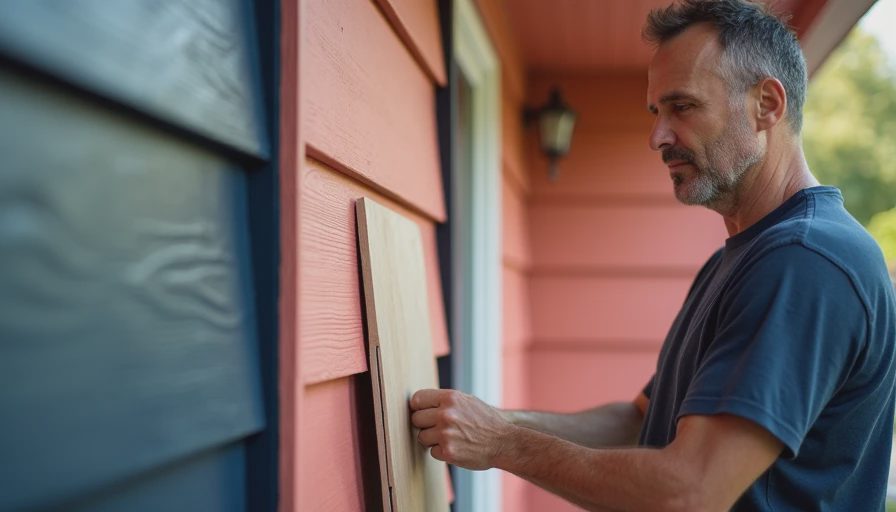
What I'd expect on an average Midwest house
For a typical 1,800 to 2,200 square foot home in the Midwest, a full re-side with a wood-look metal product often falls in the $25,000 to $45,000 range. Simpler homes with fewer openings can come in lower. Homes with dormers, gables, and lots of window trim can run higher. If there is rotten sheathing, bad flashing, or insulation work under the old siding, add more. That is the part nobody likes, but it is also the part that keeps the new wall from becoming a problem in three winters.
I remember a 1990s colonial outside St. Paul where the homeowners wanted the cedar look without cedar maintenance. The house had decent bones, but the old vinyl was brittle and the window trim was tired. We ended up replacing some sheathing at the lower courses, adding new wrap, and using a wood-grain metal system with darker trim. The finished job was not cheap, but the house looked crisp and the owners stopped worrying about peeling paint and warped boards every spring. That is the kind of project where the price starts to make sense.
When it makes sense to spend more
If you plan to stay in the house for a long time, the extra spend can be justified by fewer repaints, better curb appeal, and less headache around rot-prone areas. If you are selling in a year, I would think harder. Buyers notice fresh siding, but they do not always pay dollar for dollar for the premium finish. The upgrade tends to pay best when the home has harsh weather exposure, a lot of visible street frontage, or a design that looks better with a warm wood tone than with plain vinyl.
My rule is simple: buy the better system when the house earns it. If the wall is flat, the detailing is tight, and you want a lower-maintenance look that still has some character, this is worth a serious quote. If the home already has a long list of roof, window, or drainage problems, fix those first. Siding hides a lot, but it does not forgive bad water management.
I've been on that roof. Let me save you the trip: get two bids, make them itemize the trim and tear-off, and compare the finished wall, not just the sticker price. That will tell you more than any glossy sample board ever will.





No notes on this sheet yet.