Deck building in freeze-thaw zones is less about picking a pretty board and more about managing water, movement, and the ground beneath the deck. I’ve repaired plenty of decks around Minneapolis, Madison, and northern Wisconsin where the boards looked acceptable but the posts had shifted, the stair stringers had split, or the ledger had started pulling away from the house.
Freeze-thaw weather is hard on exterior work because water gets into small gaps, freezes, expands, and then melts. That cycle repeats dozens of times over a winter. A deck that handles one cold season can still fail after three or four if the framing, fasteners, and drainage details were treated as afterthoughts. Build it correctly at the start, and you’ll spend your weekends staining or sweeping instead of rebuilding.
Why Freeze-Thaw Weather Damages Decks
The ground is the first trouble spot. When wet soil freezes, it expands and can push against posts, footings, and stair supports. When the soil thaws, it settles unevenly. That movement can leave one corner of a deck high, another low, and the stairs sloping toward the house.
A shallow concrete pad poured directly on the soil is not a reliable footing in a cold climate. It can heave several inches, especially where downspouts dump water nearby. Frost-resistant footings need to extend below the local frost line or use an approved helical pile or other foundation system designed for the site. Frost depth varies considerably, so this is one detail to confirm with your building department before digging.
Water also attacks the wood itself. Deck boards absorb moisture through their ends and faces. Framing lumber stays wet where leaves collect, where boards touch the house, or where a beam sits directly on a post. Those are the places where rot begins, usually out of sight.
I once inspected a 2004 deck in Edina where the owner thought the loose railing was the main problem. The real issue was a beam bearing on undersized posts with no proper drainage between the connections. The railing was only the symptom. The lesson is simple: movement at the top often starts with water or soil movement below.
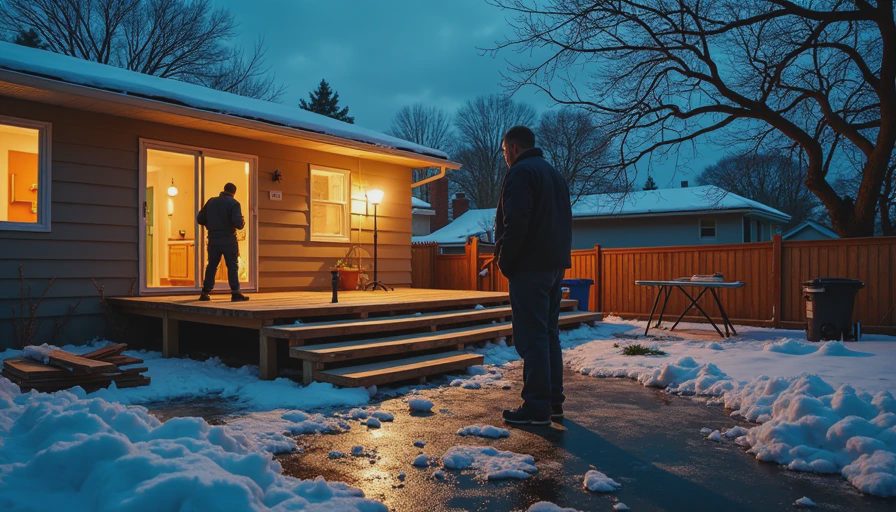
Footings, Posts, and Framing That Can Take Movement
Good deck building in freeze-thaw zones starts with stable support, not the decking material. Use footings sized for the loads and soil conditions, with posts kept above standing water. A post should not disappear into a concrete blob at grade where moisture can stay trapped around the wood. Use a proper post base or approved connection that keeps the end grain elevated and allows water to drain.
For pressure-treated framing, choose lumber rated for ground contact where the design or local conditions call for it. Cut ends need field treatment approved for treated wood. I see crews make clean cuts and then leave the exposed end grain bare. That shortcut gives water a direct path into the post or beam.
Use structural screws or hot-dip galvanized or stainless steel connectors rated for exterior use. Standard interior screws rust quickly and can stain composite boards. In coastal areas or near salt exposure, stainless steel is often worth the extra cost. In most inland cold climates, quality hot-dip galvanized hardware is a practical choice.
The ledger deserves special attention. It needs proper flashing, a solid connection to the house framing, and enough spacing or drainage to prevent water from sitting behind it. Caulk is not a substitute for flashing. A ledger fastened through siding or brick veneer without a real connection to the structural wall is a serious red flag.
Choosing Deck Boards for Cold, Wet Winters
Pressure-treated pine is usually the lowest-cost option, often around $4 to $8 per square foot installed depending on design and local labor. It can last many years when the framing is sound, but it moves, checks, and needs regular cleaning and staining. Let it dry after installation, then apply a quality penetrating stain according to the product instructions.
Cedar looks good and is easier to work with, but it is softer and typically costs more than basic treated lumber. It can show dents from furniture and snow shovels. Cedar also needs consistent maintenance if you want it to keep its color instead of turning gray.
Composite decking from brands such as Trex, TimberTech, and Fiberon reduces staining and annual maintenance. It does not eliminate movement. Boards still expand and contract with temperature, and the framing underneath still has to drain properly. Dark composite boards can become hot in direct sun, while some budget products can show scratches or fade unevenly.
For a typical 300-square-foot raised deck, composite decking can push the total project into the $18,000 to $30,000 range when stairs, railings, demolition, and complicated footings are included. That is a large jump over basic treated lumber, but the value is easier to see if you plan to stay in the house for 15 years and do not want to stain every other summer.
Drainage and Airflow Matter More Than Most Homeowners Think
Deck building in freeze-thaw zones needs room for water to leave. Leave the manufacturer’s required gap between boards, and check that the gap will not close after swelling. Keep leaves from packing into the spaces around beams and stairs. If the deck sits close to the ground, use a design that allows air movement instead of creating a damp box.
Where a deck attaches to the house, install flashing that directs water away from the wall. A deck can look dry from above while water runs behind the ledger and into the rim joist. That hidden leak can damage siding, insulation, and interior drywall before you see a stain inside.
Downspouts should discharge well away from footings. I prefer a solid extension or buried drain that carries water several feet from the structure, provided the outlet does not create a new problem for a neighbor or foundation. Never let a downspout empty directly beside a post and expect the soil to stay stable.
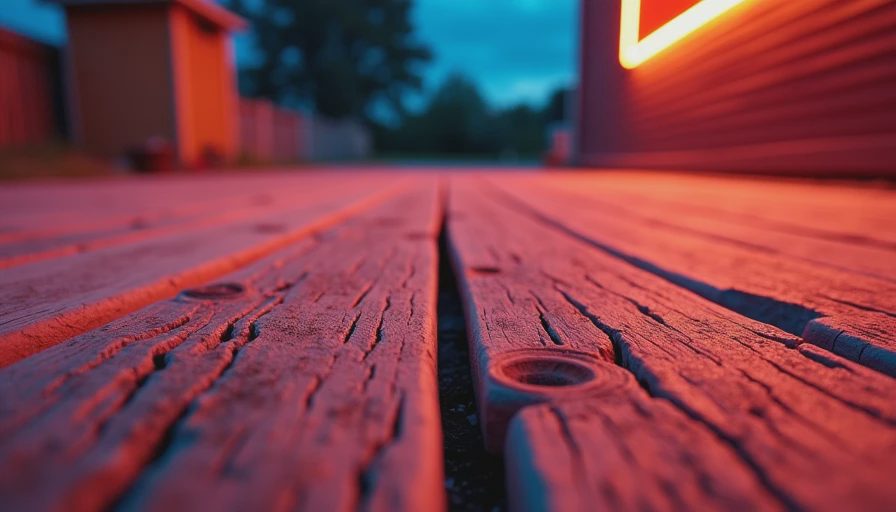
Stairs, Railings, and Fasteners Are Common Failure Points
Stairs take more abuse than the main deck. People drag snow, planters, grills, and firewood across them. Stringers need proper support at the top and bottom, and the bottom should not sit in wet soil. A small concrete landing or approved support can keep the stair assembly from sinking every spring.
Railings need solid blocking and dependable connections, not just screws driven into the edge of a deck board. Grab a railing and push it firmly. If it moves at the posts, the connection needs attention. Loose railings are a safety problem and one of the first defects an inspector or future buyer will notice.
Avoid mixing incompatible metals. Some treated lumber contains preservatives that can accelerate corrosion in ordinary fasteners. Use the hardware specified for exterior treated wood, and do not substitute drywall screws because they are already sitting in your garage. That is how a clean-looking deck ends up with dark streaks and failed connections.
A Practical Cost and Contractor Checklist
For a straightforward ground-level deck, a two-person crew might finish in three to five working days. A raised deck with demolition, deep footings, stairs, guardrails, and difficult access can take two to three weeks. Budget roughly $12,000 to $20,000 for a modest treated-wood deck and $20,000 to $35,000 or more for a larger composite project in many cold-climate markets.
When comparing estimates, ask each contractor these questions:
- How deep will the footings be, and what frost-depth requirement applies here?
- What keeps water away from the ledger and rim joist?
- Which fasteners and connectors are included in the price?
- How will posts connect to footings, and how will stairs bear at the bottom?
- Is demolition, hauling, permit work, and final inspection included?
- What spacing does the decking manufacturer require for this climate?
A low bid that leaves out flashing, proper footings, or structural hardware is not a bargain. You are simply paying for those corrections later, usually after the deck has been finished and the contractor is hard to reach.
Deck building in freeze-thaw zones rewards boring decisions: deep and stable footings, protected ledgers, open drainage, corrosion-resistant hardware, and a realistic maintenance plan. I’ve been on that roof—and plenty of decks beside it. Let me save you the trip: spend money below the boards before spending extra on a premium surface above them.
Stay warm. Stay dry. — Dean


No notes on this sheet yet.