
Why Most Maintenance Advice Falls Short
Most checklists you find online are written by people who’ve never patched an ice dam at 6 AM in January or dealt with a deck railing that loosened after the spring thaw. I’ve lived the reality of Minnesota exteriors for 14 years as a contractor and now in my own 1998 colonial. This calendar isn’t theory — it’s what actually works when the temperature swings 50 degrees in a day and snow piles up for months.
I've been on that roof. Let me save you the trip.
Spring: Wake-Up and Damage Assessment (March–May)
Spring is when your house tells you what suffered over winter.
Key Tasks:
Roof & Gutters: Clear winter debris from gutters. Look for missing shingles, ice dam evidence (stained ceilings inside), and loose flashing. Check downspouts for blockages.
Siding & Trim: Walk the perimeter. Look for rot at the bottom course, popped nails, or buckled panels. Pay special attention to south-facing walls that took the most sun and melt cycles.
Deck & Patio: Inspect for loose railings, popped deck screws, and any soft spots in posts. Power wash gently and check flashing around the ledger board.
Windows & Doors: Test for drafts. Look for cracked caulk and failed weatherstripping. Clean tracks and lubricate moving parts.
Pro Tip: After the last big snow melt, do a full exterior walk with a notebook. Take photos of anything questionable. This is the best time to schedule repairs before contractors get busy.
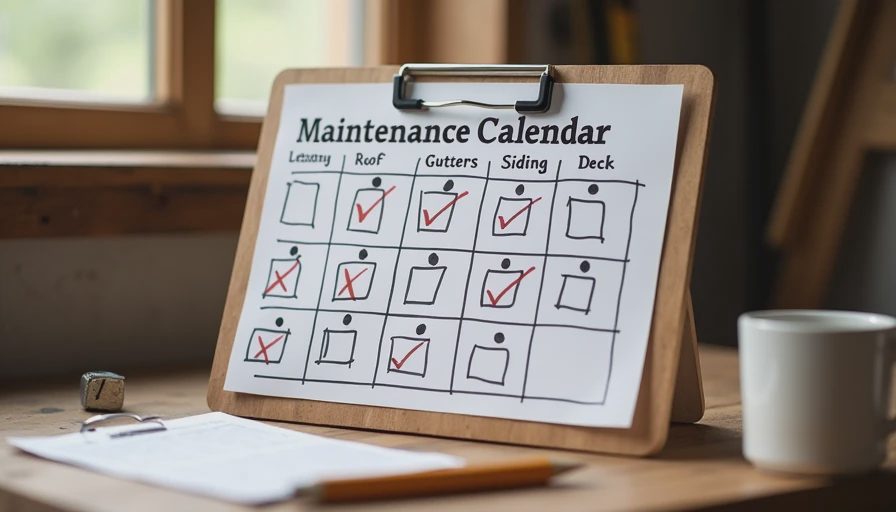
Summer: Protection and Prevention (June–August)
Summer is when you get ahead of problems.
Key Tasks:
Roof & Gutters: Clean gutters thoroughly. Trim tree branches overhanging the roof. Have a professional roof inspection every 3–4 years.
Siding & Trim: Wash siding (especially vinyl and fiber cement). Touch up paint on trim. Look for signs of carpenter bees or other pests in wood.
Deck & Patio: Deep clean the deck. Re-stain or seal as needed. Pressure-treated lumber usually needs attention every 1–2 years. Check and tighten all hardware.
Windows & Doors: Inspect screens. Check seals around windows. Consider adding or replacing storm doors for extra protection.
This is also the perfect time for bigger projects — new siding, roof replacement, or deck rebuild — before fall deadlines hit.
Fall: Button-Down Mode (September–November)
Fall is the most critical season for preventing winter damage.
Key Tasks:
Roof & Gutters: Final gutter cleaning. Install leaf guards if you have heavy tree cover (I only recommend certain types after trying six). Make sure roof vents are clear.
Siding & Trim: Final inspection for gaps. Seal any openings where water could enter. Paint or stain as needed before temperatures drop.
Deck & Patio: Heavy cleaning and final sealing. Store outdoor furniture. Cover or protect anything that can trap moisture over winter.
Windows & Doors: Install storm windows if you use them. Replace any worn weatherstripping. Test locks and seals.
Critical Item: Make sure your attic insulation is adequate and ventilation is working. Poor attic ventilation is the #1 cause of ice dams I’ve seen.
Winter: Monitoring and Quick Fixes (December–February)
Winter isn’t the time for big work, but you can prevent disasters.
Key Tasks:
Roof & Gutters: Keep gutters and downspouts clear of ice. Watch for ice dams forming at the eaves. If you see them, address ventilation and insulation issues in spring.
Siding & Trim: Knock heavy snow off lower siding if safe. Watch for ice buildup around windows and doors.
Deck & Patio: Clear snow from the deck to prevent water pooling and freeze damage. Avoid using salt or harsh de-icers that can damage concrete or metal.
Windows & Doors: Monitor for condensation or frost inside. This often signals poor ventilation or air sealing issues.
Safety Note: I’ve been on icy roofs in January. Unless you’re experienced, leave winter repairs to professionals.
My Personal Minnesota Calendar Summary
March: Full inspection + photo documentation
April–May: Repairs and spring cleaning
June–July: Major projects and sealing
August: Final prep before school starts
September–October: Gutter cleaning and winterization
November: Final walk-around
December–February: Monitor and minor fixes only
What I Do on My Own House
Every spring I walk the perimeter with my kids. They’ve learned to spot problems early. My “mistake bucket” in the garage gets new additions when I find failed products. This routine has kept our home solid through some brutal winters.
Why This Calendar Works
It respects the reality of our climate instead of fighting it. We focus on water management above everything else. Stop water before it enters, and most problems disappear.
The best part? You don’t need to do everything perfectly. Consistent attention beats occasional heroic efforts every time.
Start Small If You’re Overwhelmed
Pick one season and master it this year. Many homeowners start with spring inspection and fall gutter cleaning. Those two habits alone prevent the majority of expensive repairs I’ve seen over the years.
Your house will thank you. Your wallet will thank you. And you’ll spend less time worrying and more time enjoying your home — whether that’s smoking brisket on the deck or watching the kids play in the yard.
Stay warm. Stay dry.
— Dean





No notes on this sheet yet.