Free exterior home design sounds like the answer when you're staring at faded siding, a tired front door, or a deck that has seen too many Minnesota winters. Before you order samples or call three contractors, you can use online design tools to test colors, materials, rooflines, windows, and landscaping. The useful part is seeing relationships. A gray siding color that looks good on a screen can look blue against real snow, while a warm white trim can make an older house look much cleaner.
I've used plenty of these tools with homeowners over the years. They're good for narrowing choices. They're not good at telling you whether a wall has rot behind the bottom course of siding or whether a replacement window will be installed correctly. Treat free exterior home design as a planning tool, not a construction plan. That distinction can save you thousands.
What free exterior home design tools can actually do
Most free exterior design websites let you upload a photo or select a sample house. From there, you can change siding colors, trim, shutters, roofing, doors, and sometimes stone or brick. Some manufacturer tools focus on one product line. James Hardie, CertainTeed, LP SmartSide, and several window and paint companies offer visualizers that are useful for comparing their available finishes.
Start with one clear photo taken straight on. Avoid a picture with cars, trees, or deep shadows covering half the house. Crop out distracting items, then make one change at a time. Test the siding first. After that, compare trim, front door color, garage door color, and accents. If you change everything at once, you won't know which decision made the house look better.
Save three versions instead of twenty. One should be conservative, one should be slightly more modern, and one can be the bold choice. For a 1998 colonial, that might mean warm gray vinyl with white trim, sage fiber cement with dark bronze accents, and a deep blue front door. The point is to compare complete combinations, not collect endless color swatches.
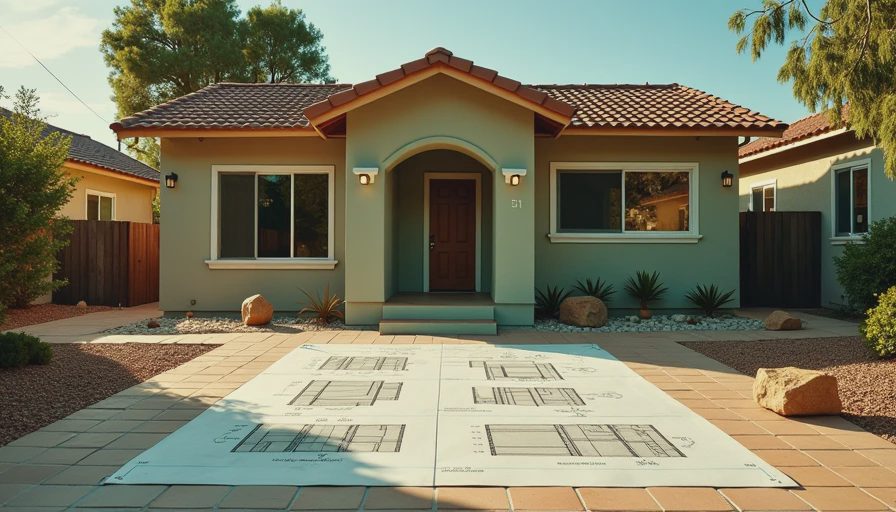
Check the design against your actual house
A rendering can hide problems that matter in the real world. Look closely at the photo before deciding on color. Is the bottom of the siding stained? Are the corner boards soft? Does the gutter dump water beside the foundation? A beautiful mockup won't correct a bad flashing detail.
Cold climates deserve extra attention. Dark colors can absorb more summer heat, though proper installation and product specifications matter more than internet arguments about one color being universally unsafe. Freeze-thaw cycles are harder on exposed joints, caulk, masonry, and poorly supported trim. If your house gets heavy wind, ask whether the selected siding system has the required fastening schedule for your area.
Scale matters, too. Wide lap siding can make a small ranch look calmer, while narrow siding can suit a taller colonial. Oversized shutters often look awkward beside modern windows. Stone veneer can work around an entry or garage base, but covering the whole front of a modest house can make it look heavy and expensive without adding much function.
I once visited a house in Edina where the owner wanted dark siding and bright white trim. The concept looked sharp on a tablet. On the actual house, the old aluminum soffit and sun-faded garage door made the contrast look patchy. We replaced the damaged trim and matched the garage before choosing the final siding color. The lesson was simple: design around the parts you're keeping, not just the new product.
Use free exterior home design to build a realistic budget
A visualizer won't show labor, tear-off, disposal, flashing, permits, or repairs. Those items often decide the final price. On an average ranch, basic vinyl siding might land around $8,000 to $15,000 installed, depending on size, access, and how much trim needs replacement. Fiber cement commonly runs higher, often around $15,000 to $25,000 for a similar project. Engineered wood can sit between those ranges, but the estimate depends heavily on brand, finish, and installation details.
Windows and doors add up quickly. A quality replacement window may cost roughly $600 to $1,200 installed, while a new insulated entry door can run $1,500 to $4,000 with proper flashing and trim. These are planning ranges, not promises. A house with rotten sheathing, unusual access, or three layers of old siding can move the number fast.
Use your design image to request comparable bids. Give each contractor the same target materials and colors. Ask whether the price includes house wrap, metal flashing at windows, disposal, permit fees, and replacement of damaged sheathing. If one estimate is $8,000 lower, find out what was left out before calling it a bargain.
Materials should follow the house and the weather
Vinyl is still a practical choice for many cold-climate homes. It doesn't need painting, and good installation leaves room for expansion and contraction. The cheap version can look thin and may be more likely to warp if installed tightly or exposed to unusual heat. Ask for the product thickness and fastening method rather than relying on phrases like premium grade.
Fiber cement gives you a crisp, painted appearance and can hold up well when installed correctly. It is heavier, takes more labor, and needs careful attention around penetrations and joints. I've installed James Hardie several times. The material is not the weak link; rushed flashing and careless caulk work are.
Engineered wood offers a convincing wood appearance without the maintenance of traditional cedar, but the cut edges, clearances, and paint system matter. Cedar can look excellent on an accent gable or porch, yet it needs regular staining or painting. A free exterior home design mockup should show those materials in their actual locations, because mixing too many textures makes a normal house look busy.

Turn the mockup into a contractor checklist
Print the best design or keep it on your phone when contractors visit. Mark the areas that need repair: soft trim, cracked siding, loose gutters, peeling deck boards, and any basement wall that gets damp. Ask each contractor to walk those areas with you. A good exterior estimate should explain what gets removed, what gets repaired, and how water will be directed afterward.
For siding, ask how the crew will handle window flashing, outside corners, utility penetrations, and the transition above the foundation. For roofing and gutters, ask where runoff will go and whether downspouts need extensions. For a deck, check the ledger, posts, stairs, and railings before discussing stain color. Cosmetic design comes after water management and structure.
Get material samples and look at them outdoors in morning, afternoon, and shade. Keep the samples beside your roof, brick, foundation, and permanent window frames. A color that works at noon may look harsh beneath a blue-gray winter sky. If you're comparing bids, verify that the samples and installation details match the written scope.
The best design is the one you can maintain
A dramatic front door is easy to repaint. Rotting trim behind a decorative shutter is not. Prioritize improvements that protect the house: sound flashing, working gutters, durable siding clearances, sealed penetrations, and a properly installed door. Then spend the remaining budget on appearance.
Free exterior home design helps you make those choices before a crew arrives. Use it to test proportion, color, and material combinations, then verify every attractive idea against weather, maintenance, and cost. The cheapest project is not always the one with the lowest bid. It is the one that doesn't need to be opened up again two winters later.
I've been on that roof. Let me save you the trip: take the extra hour to inspect the boring details before committing to the pretty picture. Stay warm. Stay dry. — Dean




No notes on this sheet yet.