I showed up to a house in south Minneapolis where the homeowner thought he needed new siding. What he really needed was someone to look at the whole shell. That is where an exterior home remodel designer earns the money. A good one keeps you from buying the wrong materials, redoing work twice, or discovering after the fact that the window trim, flashing, and gutters never should have been separate jobs in the first place.
If your place was built between 1980 and 2010, there is a good chance the problems are layered. A cracked siding panel is one thing. A cracked panel, soft trim, tired windows, and a leaky gutter run is a project. I’ve seen plenty of homeowners try to solve that piecemeal, and the second bid always looks cheaper right up until the change orders start.
What an exterior home remodel designer should handle
A solid exterior home remodel designer should do more than pick colors. They should look at how water moves around the house, how the roof edge meets the walls, how windows are trimmed, and whether the siding system actually works in a freeze-thaw climate. Around here, that means thinking about ice dams, wind-driven rain, and the kind of winter abuse that chews up cheap caulk in a hurry.
On a real project, that person should help you lock down the scope before anyone starts tearing off material. If you are replacing siding, they should talk through house wrap, flashing tape, starter strips, trim boards, corner details, and whether the walls need new insulation or sheathing repairs. If windows are part of the plan, they should know the difference between a good flange install and a sloppy pocket job hidden by trim. If a deck or front entry is involved, they should be able to keep those details from fighting each other.
They should also help you choose materials that fit the house and the budget. Vinyl still makes sense on a lot of homes. Fiber cement, like James Hardie, is a stronger choice when you want a heavier look and better fire resistance. LP SmartSide has its place if it is installed and flashed right. For windows, I have seen good work from Andersen and Marvin when the install is tight. For decks, Trex and TimberTech are common because they cut down on painting and staining headaches. The designer’s job is not to push a favorite brand. It is to match the system to the house.
When an exterior home remodel designer saves you from bad sequencing
A lot of bad exterior jobs fail because the order was wrong. The siding goes on before the windows are corrected. The gutters get hung before the drip edge is fixed. The deck ledger gets flashed after the siding trim is already pinned in place. Once that happens, somebody starts guessing, and guessing is expensive.
I had a job in Edina where the owner wanted to replace windows and re-side the front elevation at the same time. The original contractor wanted to do windows first, then “figure out” the siding tie-in later. That usually means extra trim, extra caulk, and a sloppy seam somewhere. We slowed it down, pulled the trim plan apart, and changed the order. That saved the homeowner a couple grand in extra labor and kept the lines clean.

This is where an exterior home remodel designer earns trust. They should know what has to be exposed, what can stay in place, and what should never be buried. In cold weather, the details matter more than the brochure. If there is rot at a window sill, you fix that before new casing goes on. If the roof edge dumps water behind the fascia, you solve that before new soffit and gutters hide the problem. A pretty wall that leaks is still a leak.
What an exterior home remodel designer costs on a real job
The cost depends on how much thinking you need before the hammers start swinging. For a straightforward consult, I have seen pricing land around $500 to $1,500. If you want measured drawings, material specs, finish selections, and a more complete scope for siding, windows, or a deck rebuild, plan on roughly $2,000 to $8,000. Bigger homes and complicated façades can run higher, especially when the designer is helping coordinate several trades.
That money can still save you plenty. A vinyl siding job on an average ranch might run $12,000 to $20,000. Fiber cement is often more like $20,000 to $35,000, and that climbs if the crew has to replace sheathing or trim. Window replacement for a normal house can land anywhere from $8,000 to $20,000, depending on brand and count. A composite deck can swing from about $18,000 to $40,000 once railings, stairs, and demolition are included. If the scope is loose, bids wander all over the map.
A good plan reduces the wandering. It gives contractors the same target, so you are comparing apples to apples instead of one vague number against another. That matters when you are trying to decide between standard vinyl, fiber cement, or a full makeover with new windows and trim. The cheapest bid is often the one that left out the hard parts.
The details that keep the outside tight for years
This is the part most homeowners never see, and it is the part that saves the most money. Flashing around windows and doors needs to be tied into the weather-resistive barrier in the right order. Kickout flashing belongs where a roof line ends at a wall. Gutter downspouts need to send water far enough away that it does not soak back toward the foundation. If a deck ledger attaches to the house, that connection needs real flashing, not just a bead of sealant and a prayer.
I have been on enough roofs in January to know what happens when those details get skipped. Water finds the weak spot, then freeze-thaw turns a small mistake into swollen trim, stained drywall, or a soft band of sheathing you can poke through with a screwdriver. That is why an exterior home remodel designer should think like a water manager first and a stylist second.
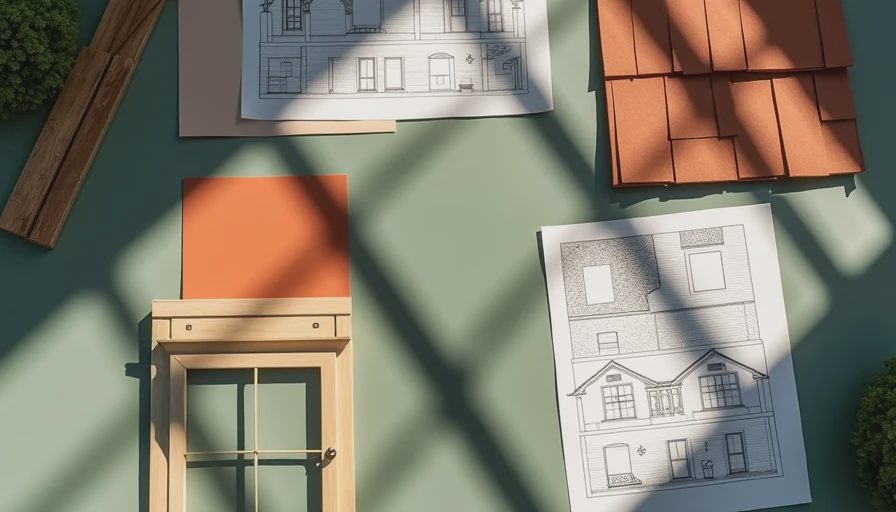
If your house is older, ask about rain-screen spacing behind siding, attic ventilation, and whether the existing trim can be saved or should be replaced. Sometimes the answer is simple. Sometimes it is cheaper to redo the full wall once than to keep patching the same corner every two winters. That is not overbuilding. That is buying a longer life.
Questions to ask before you sign
Before you hire anyone, ask how they sequence the work. Ask who handles the flashing details, who orders the materials, and what happens if hidden rot shows up after tear-off. Ask for the exact siding profile, window model, trim type, and gutter size in writing. A contractor who says “we’ll figure it out as we go” is telling you exactly what you need to know.
Ask how they handle change orders too. Good projects still find surprises, but the price for extra work should not feel made up on the fly. I like to see a line for tear-off, a line for disposal, a line for new trim or sheathing if needed, and a clear note about what is included and what is not. That kind of paperwork is boring in the best way.
If you are shopping for an exterior home remodel designer, listen for plain talk. They should be able to explain the house, the order of operations, and the money without hiding behind buzzwords. If they can walk you through the job like they have been on that ladder themselves, you are probably on the right track. I’ve been on that roof. Let me save you the trip.





No notes on this sheet yet.