I've patched more ice-dam leaks than I can count. If you're researching roof ice dam prevention products, you're already ahead of most homeowners. This isn't a fun topic, but it beats a wet ceiling and a $5,000 repair bill. Let me save you the trial and error.
Back in my contracting days, I once got a call from a guy in Edina whose ceiling was dripping in January. He'd spent $200 on ice dam gear the prior fall — heat cables, a roof rake, and melting pucks — but installed them wrong. The cables shorted, the rake sat unused, and the pucks melted a channel that froze again within a day.
What Actually Causes Ice Dams
An ice dam forms when heat escapes from your living space into the attic, warms the roof deck, and melts snow above. That meltwater runs to the cold eaves and refreezes into a ridge. As the dam grows, it traps water behind it, pushing it under the shingles and into your home.
The fix is twofold: stop the heat loss and manage the snow. The best prevention products address one or both of those. Some are physical tools. Some are insulation kits. Few of them work alone.
The Best Roof Ice Dam Prevention Products, Ranked by a Former Contractor
Here's what I've seen work.
Heat Cables: The Workhorse
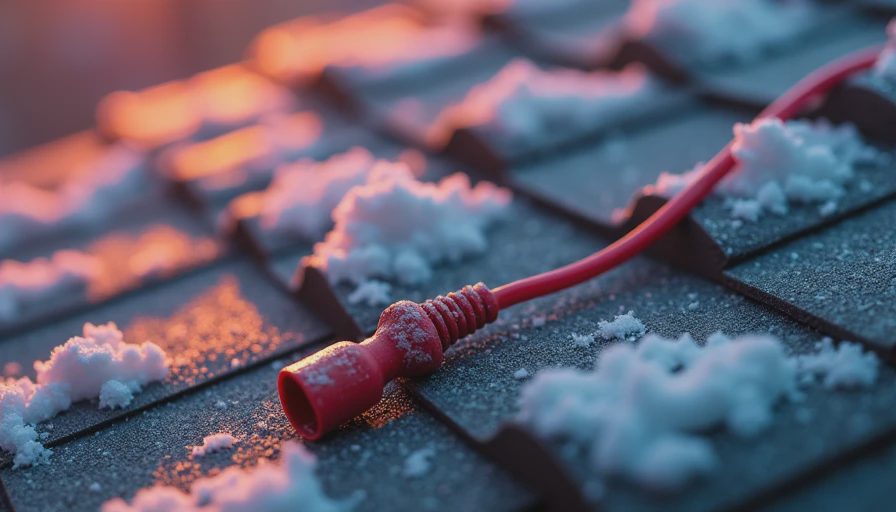
Heat cables, also called roof de-icing cables, run along the eaves in a zigzag pattern to melt channels for water to drain. Frost King and EasyHeat are the big names. A 60-foot cable kit runs about $60 to $100 at Home Depot or Ace.
I've installed these on a dozen houses. The trick is positioning: the cable should form an inverted V pattern along the first 18 inches of the roof, overhanging the edge by about 6 inches so water drips into the gutter. Most homeowners mess this up by looping the cable too tightly or clipping it to shingles instead of letting it hang loose. Follow the manufacturer's spacing exactly. If you do, a set of cheap roof ice dam prevention products from the big box store beats a fancy smart system every time.
Roof Rake
A roof rake is the cheapest way to prevent ice dams before they start. For about $40, you can get a 20-foot telescoping rake designed to pull snow off the eaves from the ground. You don't need to clear the whole roof — exposed shingles near the edges break the cycle. I tell homeowners to rake after every snowfall over 6 inches. It takes 20 minutes and it's the single most effective prevention on the market.
Chemical Melting Pucks and Ice Dam Socks
These are less useful than most people think. They're calcium chloride in small fabric tubes that you throw on the dam to melt a channel. They cost $10 to $20 each. I've seen them melt a narrow path, but they don't stop the dam from growing. Use them as a temporary fix, not a prevention strategy.
Where Roof Ice Dam Prevention Products Fall Short
The uncomfortable truth is that roof ice dam prevention products can't fix a poorly insulated attic. If your attic floor lets heat escape like a sieve, a heat cable is just treating the symptom. The cable keeps an open channel, but you're still losing warm air, wasting energy, and letting the roof deck cycle between freeze and thaw.
What does fix the root cause? Air sealing and insulation. In my own 1998 colonial, I had a crew blow in R-49 fiberglass over the living space and seal the plumbing vents and soffit baffles. That cost me $1,100 about five years ago. My heating bill dropped noticeably, and I haven't had an ice dam since.

So when you compare prevention products, look at the attic side, not just the roof side. A $150 can of spray foam and a couple rolls of batt insulation can beat a thousand dollars of fancy heating cables.
My Step-by-Step Prevention Routine
If you want a winters worth of protection without going broke, here's what I'd do this fall:
- Rake the roof after heavy snows. Set a reminder on your phone.
- Install heat cables along the eaves before the first freeze. Test them in late fall to make sure they're not shorted.
- Check your attic's insulation depth. A typical home needs 10 to 14 inches of fiberglass or equivalent R-value. If you can see floor joists, you don't have enough.
- Seal the gaps. Use spray foam around pipes, vents, and chimneys where warm air escapes.
- Clean the gutters so meltwater has somewhere to go.
This routine costs under $200 in materials if you already have a rake. It doesn't need an electrician or a roofing crew. It works.
What I'd Skip
Don't pay $400 for a "smart" heat cable system that you control from your phone. The mechanical thermostats on a $70 cable do the same thing. Don't spend money on salt-based de-icing pellets that corrode your gutters and kill your shrubbery. And if a contractor tries to sell you a full roof replacement because you had one ice dam, walk away. Ice dams are an attic problem, not a shingle problem.
My Bottom Line
Pick two or three roof ice dam prevention products that fit your house, install them properly, and check on them after every storm. The heat cable plus a roof rake will solve 80% of ice dam issues for under $150. Add attic sealing and you're in the top tier of protected homeowners.
I've been on that roof. Let me save you the trip: start with the rake, add a cable, and keep your attic cold. That's the whole secret. Stay warm. Stay dry. — Dean




No notes on this sheet yet.